Systems guide
The salary cap, the wage bill, and how clubs actually go broke
Nobody goes broke by overpaying a transfer fee. They go broke by accumulating salary. Here is how the cap, the wage bill and the facilities actually interact.
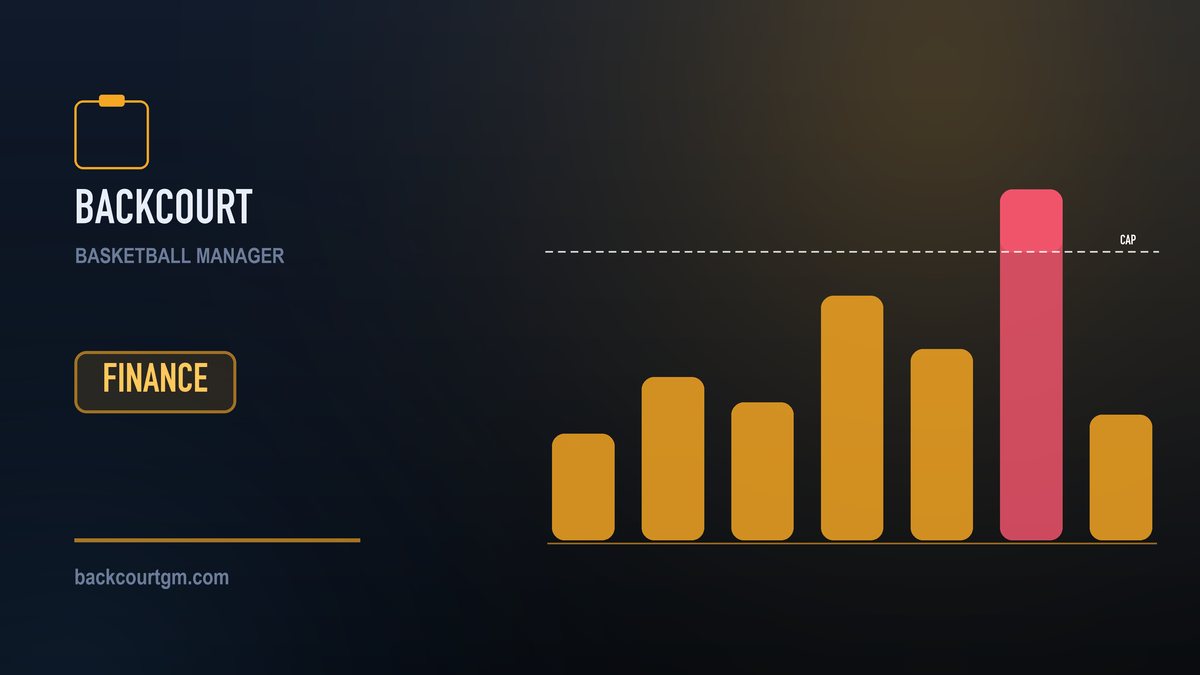
Managers do not go broke in Backcourt by overpaying a transfer fee. A fee is paid once and then it is over. They go broke by accumulating salary, which arrives every single week for as long as the contract runs, and which is almost invisible while you are signing it.
This guide is about the money systems and how they interact — the cap, the wage bill, the treasury, the facilities and the competitions that pay.
Two different numbers
People conflate these constantly, and they behave nothing alike.
| Transfer fee | Salary | |
|---|---|---|
| Paid | Once | Every week, for the whole contract |
| Constrained by | Your treasury | The salary cap |
| Recoverable | Partly, by selling | Only by moving the player on |
| Kills clubs | Rarely | Almost always |
Before any bid, ask the question that actually matters: can I pay this wage every week until the end of the season at my current income? If the answer is no, the fee being affordable is irrelevant.
What a negative treasury really costs
A negative balance is not a loss condition. Nothing forces a game over. What happens is worse in a slow way:
- You cannot bid. The market closes to you, so you cannot fix the squad that is producing the results that would fix the money.
- The wage bill keeps arriving. The hole deepens whether or not you do anything.
- Sustained debt brings an embargo, which removes your remaining options.
Sell wage, not quality. The instinct is to sell your best player because he raises the most money. It is almost always wrong: he is also the reason you win, and once he is gone the results slide, costing you the prize money and the playoff run that would have repaired the finances properly. Sell the worst ratio of salary to minutes you actually give him — usually a well-paid veteran playing fourteen minutes a night. It barely touches your rotation and it removes a recurring cost forever.
Work down that list in order. It is common to clear a large hole without your rotation noticing.
Contracts and the renewal desk
Contract talks run against the cap, so every renewal is a decision about what else you can afford afterwards. Two habits are worth building.
Watch the final-year badges. The squad list marks players in their final contract year. Check it every season. Renewing a player you want is always cheaper than replacing him from the market, and losing a developed prospect for nothing is the most expensive outcome available.
Do not renew out of loyalty. A thirty-two-year-old on a long deal at peak money is the single most common cause of a stuck club, because you are paying for seasons that have already happened. The transfer guide covers how age and contract length move a player's asking price — the same forces are working against you when you extend.
Where money actually comes from
Income is not only league position. The 45-week calendar carries real revenue events:
| Event | Pays |
|---|---|
| NBA Cup winner | $6M |
| NBA Cup finalist | $2M |
| Christmas game (week 14) | TV money and prestige for the winner |
| Playoff progress | The long-run driver, plus prestige |
The Cup deserves more attention than most managers give it. It is five groups of four, three group weeks and then a quarter-final, semi-final and final — a genuinely reachable trophy for a mid-table club, and $6M against a wage bill is not a rounding error. If your league season is already gone by February, the Cup is where your remaining season is.
The six facilities
Gym, medical, academy, arena, analytics and recovery, each with a build time and ongoing upkeep. Upkeep is the part people forget: a facility is a permanent line on the wage-bill side of the ledger, not a one-off purchase.
| Facility | What it buys you | Best when |
|---|---|---|
| Medical | Fewer and shorter absences | Injuries are costing you availability |
| Recovery | Energy returns faster between fixtures | You run Run & Gun or a full-court press |
| Academy | A better annual youth intake | You are building — it compounds over seasons |
| Analytics | At level 2, the tailored next-opponent read | You actually use the tactics screen |
| Gym | Faster progress from every training week | You have young players with room to grow |
| Arena | Matchday revenue and fan mood | You are established and want the income line |
Medical and recovery are the ones that pay for themselves fastest, because they protect the squad you have already bought. An injured star is a wage you are paying for nothing — see energy and injuries.
Board, fans and the coaching market
Club mood is tracked across board, fans and the locker room, and it is not decoration. The board's view of you feeds the season report card and, through the coaching market, whether you keep your job. Managers get sacked; offers arrive from other clubs; resignation is a real option.
The practical reading: a season that is financially responsible but sporting a poor record is not safe. The board wants both. Cutting your wage bill to zero by selling everyone is a way to be broke and unemployed.
A financial routine
- Before any bid, check the weekly wage against income, not the fee against the treasury.
- Every few weeks, scan salary against minutes played. The worst ratio is your first sale.
- Check final-year badges each season and renew the players you actually want early.
- Take the Cup seriously. $6M is a signing.
- Upgrade medical or recovery first, academy if you are building, and remember upkeep.
- Do not extend a peak-money contract into a player's decline.
None of these are dramatic. Financial trouble in this game is never dramatic — it is a wage bill that grew four percent a season for six seasons while you were looking at the league table.
The recurring cost almost nobody budgets for is facility upkeep: six facilities at level 5 cost more than twice what six at level 2 do, every week. The arithmetic is in the facilities guide.
Frequently asked
What happens if my treasury goes negative in Backcourt?
You keep playing, but you cannot bid, and the wage bill keeps arriving every week, so the hole deepens on its own. Sustained debt brings an embargo. It is a slow squeeze rather than a game over, and the way out is to sell wage rather than quality.
How do I fix a negative budget?
Find the worst ratio of salary to minutes played — usually a well-paid veteran on limited minutes, or a squad player you stopped using. Selling him barely touches your results and removes a recurring cost permanently, which is what actually repairs a treasury.
Which facility should I upgrade first?
Medical or recovery if injuries are costing you availability, since both protect the squad you already paid for. The analytics centre at level 2 unlocks the tailored next-opponent read. The academy compounds over several seasons, so it is the best early investment if you are building rather than chasing.
Does winning the NBA Cup actually matter financially?
Yes. The winner takes $6M and the finalist $2M, which is meaningful money against a wage bill, and the Christmas game carries TV money and prestige for the winner. In-season competitions are a genuine revenue line, not just a trophy.

Try it on your own club tonight
Backcourt is free on iOS and Android. Career mode works offline, and there is nothing to buy that makes your squad stronger.